

The Hidden Cost of Late Payments on Growing Businesses
Late payments are one of those problems many growing businesses quietly tolerate. At first, it feels manageable. A client pays a week late. Another asks for “a little more time.” You move on and focus on sales, delivery, or growth. But over time, late payments start doing real damage — often in ways that aren’t immediately visible on a balance sheet.
For businesses trying to scale, late payments aren’t just about missing money. They interfere with planning, strain teams, and create cash flow uncertainty that slows momentum.
Why Late Payments Hurt More as You Grow
When a business is small, founders often cover payment delays themselves. They float expenses, delay withdrawals, or personally follow up on unpaid invoices. As the business grows, that approach stops working.
Late payments turn into payment delays that affect payroll, vendor relationships, and even customer experience. Business cash flow becomes unpredictable. Financial decisions become reactive instead of strategic.
What’s worse, slow customer payments tend to cluster. If one invoice is late, others often follow. That’s how invoice delays quietly turn into unpaid invoices — and suddenly accounts receivable becomes a daily headache.
The Real Financial Impact Most Businesses Miss
Cash Flow Problems Don’t Always Look Dramatic
Cash flow problems caused by late payments don’t always show up as emergencies. Instead, they show up as hesitation. You delay hiring. You push back a marketing campaign. You negotiate shorter payment terms with suppliers just to stay comfortable.
Over time, those small compromises slow growth more than most founders realize.
Late Payments Increase Administrative Work
Every late invoice creates more work. Payment follow-up emails. Phone calls. Spreadsheet updates. Manual invoice management. None of these moves the business forward, but it consumes time that leadership and finance teams can’t afford to lose.
Payment Delays Distort Financial Visibility
When payments arrive late, financial reports stop reflecting reality. Revenue looks healthy on paper, but cash isn’t available when needed. This disconnect makes forecasting unreliable and budgeting stressful.
Why Payment Collection Breaks Down in Growing Businesses
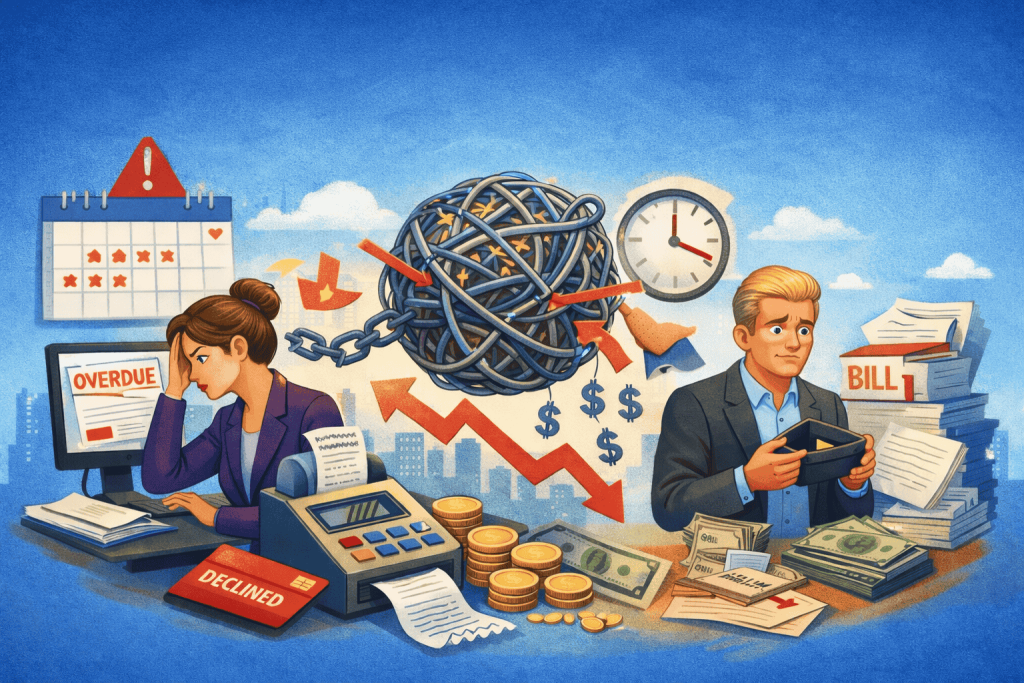
Most late payments are not caused by bad customers. They’re caused by outdated processes.
Manual invoicing, unclear payment instructions, and limited payment options slow everything down. Customers forget. Emails get buried. Invoices are missed. Payment collection becomes a manual, uncomfortable process instead of a smooth workflow.
Without automation, even well-intentioned customers pay late.
How Smarter Payment Systems Help Businesses Get Paid Faster
This is where modern platforms like PayToMe.co make a meaningful difference. Instead of treating payments as a single step, PayToMe approaches them as a complete workflow — from invoicing to collection to financial reporting.
Digital Invoicing That Reduces Invoice Delays
With PayToMe’s digital invoicing tools, businesses can create and send invoices instantly through email or SMS. More importantly, invoice status is visible in real time. You know when an invoice is sent, viewed, and paid — no guessing, no chasing.
This kind of invoice management alone can dramatically reduce late payments because it removes uncertainty on both sides.
Text to Pay Speeds Up Customer Action
One of the biggest reasons invoices go unpaid is friction. Logging into portals, finding emails, entering details — customers postpone it.
Using PayToMe’s Text to Pay feature, customers receive a secure payment link directly on their phone and can pay in seconds. For many businesses, this single change leads to faster payment collection almost immediately.
Flexible Payment Options Matter
Businesses that offer multiple payment options consistently see fewer slow customer payments. When customers can pay the way they prefer, invoices settle faster. That directly improves small business payments and stabilizes cash flow.
Without accurate, real-time data, it’s hard to know when you can invest, hire, or expand. That’s why PayToMe connects payments directly with its accounting and financial services, covering bookkeeping, accounts receivable, financial reporting, and forecasting.
By tying payments into accounting, PayToMe helps businesses see their true financial position — not just projected numbers.
Built on Trusted Financial and Technology Partners
A payment system is only as reliable as the infrastructure behind it. PayToMe’s platform is supported by industry-leading partners, including Stripe for secure payment processing, Plaid for safe bank connectivity, AWS for scalable infrastructure, and Silicon Valley Bank for financial services support.
These partnerships allow PayToMe to deliver fast, compliant, and dependable payment solutions that growing businesses can trust.
Frequently Asked Questions
Why do late payments become more common as businesses grow?
Growth often outpaces systems. Without automated invoicing and payment tracking, manual processes can’t keep up with volume.
How do late payments affect business cash flow?
They create uncertainty. Even profitable businesses can struggle when cash isn’t available at the right time.
What’s the fastest way to reduce unpaid invoices?
Clear invoices, automated reminders, and easy payment options — especially mobile-friendly ones — make the biggest difference.
Can payment tools really help get paid faster?
Yes. Reducing friction and improving visibility shortens payment cycles significantly.
Is PayToMe suitable for small and growing businesses?
Yes. PayToMe.co is designed to support small business payments while scaling smoothly as transaction volume increases.
Final Thoughts
Late payments don’t usually feel dangerous at first. They feel inconvenient. But over time, they quietly limit growth, drain energy, and introduce financial risk that businesses don’t need.
The right tools won’t just help you get paid faster — they’ll give you back control over cash flow, planning, and confidence. Platforms like PayToMe.co exist for this exact reason: to help growing businesses move past late payments and focus on what actually drives growth.