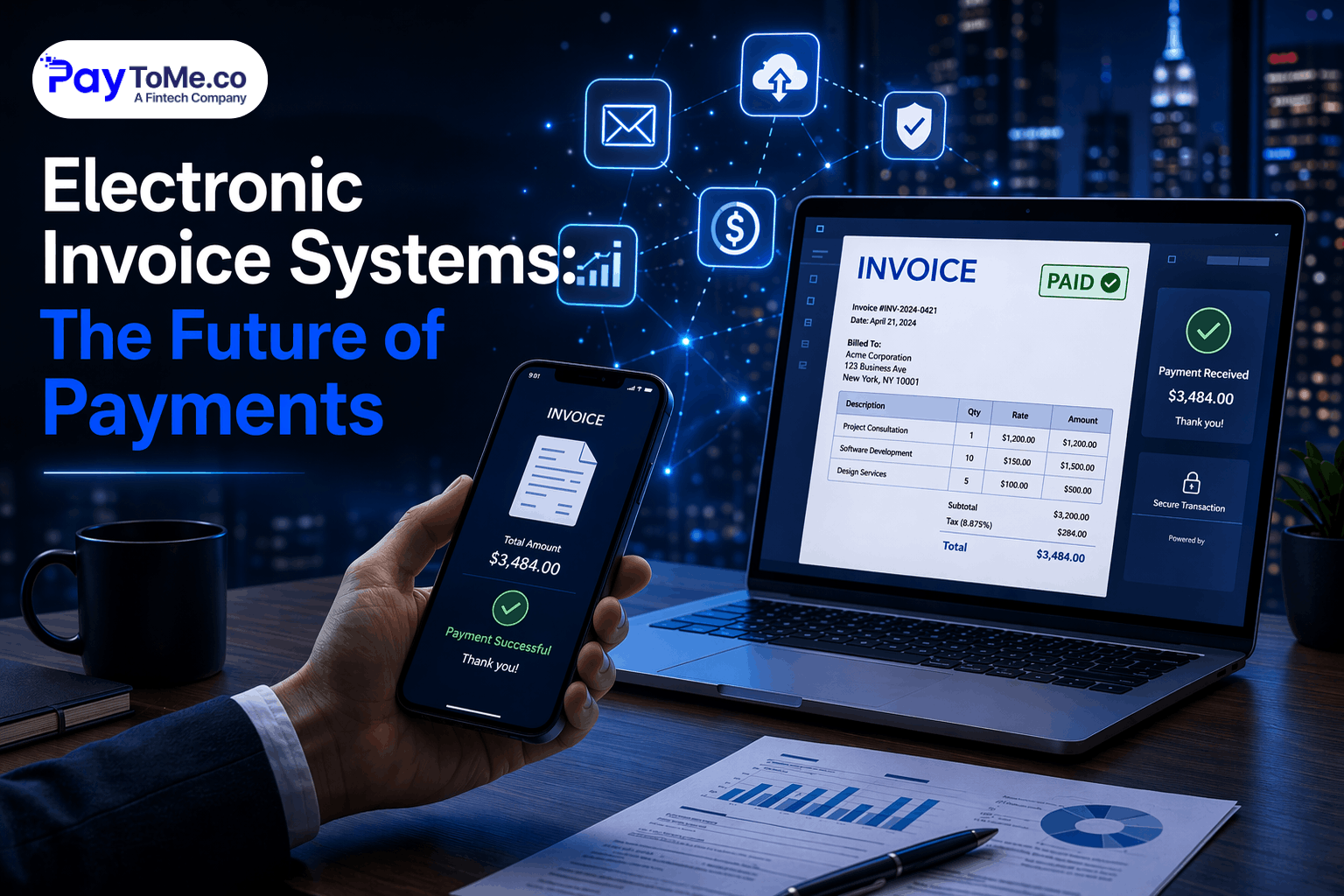
Electronic Invoice Systems: The Future of Payments
Electronic Invoice systems are quietly reshaping how businesses handle payments, billing, and financial operations. Not long ago, invoicing meant creating documents manually, attaching them to emails, and waiting—sometimes endlessly—for payments to arrive.
Today, that entire process is being replaced by faster, smarter, and more connected systems.
Businesses are no longer asking whether they should adopt electronic invoicing. The real question now is how quickly they can transition to a digital invoicing system that improves cash flow and reduces operational friction.
Platforms like PayToMe are leading this shift by combining invoice creation, payment processing, and financial tools into a single streamlined experience.
Why Electronic Invoice Systems Are Gaining Momentum
At its core, an electronic invoice is simply a digital version of a traditional invoice—but the impact goes far beyond format.
Electronic invoicing changes how businesses interact with payments. Instead of static documents, invoices become dynamic, trackable, and actionable.
A modern invoice system allows businesses to:
- Create electronic invoice documents instantly
- send electronic invoice through email or SMS
- track when invoices are viewed and paid
- automate billing and follow-ups
This shift from manual to digital invoicing is driven by one simple need: speed.
Businesses want faster billing. Customers want easier payments.
How Electronic Invoicing Works in Practice
A good electronic invoicing software doesn’t just generate invoices—it connects the entire payment workflow.
Using a platform like PayToMe’s invoicing system, the process typically looks like this:
- Create the invoice using a digital invoice generator
- Add client details, services, and payment terms
- Include a payment link or preferred payment method
- Send the invoice instantly
- Track status and receive payment
Learn more about how to create invoice online using Paytome.
That’s it. No printing. No scanning. No manual follow-ups.
This is why many businesses are replacing traditional billing systems with a fully integrated digital invoicing system.
The Real Benefits of Electronic Invoice Systems
Faster Payments
One of the biggest advantages of using an electronic invoice is speed.
When businesses send electronic invoice documents with built-in payment options, customers can pay immediately. There’s no need to leave the invoice, open another app, or manually transfer funds.
This reduces delays and improves overall cash flow.
Better Financial Visibility
With electronic invoicing, businesses no longer have to guess what’s happening with their invoices.
Modern e invoice software allows real-time tracking, so you know:
- When the invoice was sent
- when it was opened
- whether payment has been completed
This level of transparency helps businesses manage finances more effectively.
Reduced Administrative Work
Manual invoicing takes time—and it often leads to errors.
A digital invoicing system automates repetitive tasks like invoice generation, reminders, and record-keeping. This allows teams to focus on higher-value work instead of chasing payments.
Improved Customer Experience
Customers prefer convenience. When they receive an online invoice with a simple payment option, they are more likely to pay quickly.
This is especially true when invoices include features like payment links or mobile-friendly access.
Why Businesses Are Moving Away from Traditional Invoicing
Paper-based invoicing and static PDFs are quickly becoming outdated.
They are slow, difficult to track, and disconnected from payment systems.
In contrast, electronic invoicing connects billing directly with payment infrastructure. Platforms like PayToMe integrate with providers such as Stripe for payment processing and Plaid for secure financial connectivity.
The platform runs on infrastructure powered by Amazon Web Services, supported by enterprise technology from IBM, and aligned with financial institutions like Silicon Valley Bank.
This ensures that electronic invoicing is not only fast but also secure and scalable.
Electronic Invoice Systems for Modern Businesses
Whether you’re a freelancer, a small business owner, or managing a growing company, adopting an electronic invoice for business operations can significantly improve efficiency.
With tools like PayToMe, businesses can:
- generate e invoice documents quickly
- manage invoices in one centralized system
- automate billing workflows
- connect invoicing with payment processing
- streamline financial operations
This makes electronic invoicing software more than just a billing tool—it becomes part of a larger financial ecosystem.
The Future of Payments Is Digital
The shift toward electronic invoicing is part of a larger transformation in how payments work.
Businesses are moving toward systems that are:
- faster
- automated
- connected
- scalable
Electronic invoice systems sit at the center of this transformation.
They don’t just replace paper—they redefine how businesses handle transactions.
Frequently Asked Questions
What industries benefit most from electronic invoice systems?
Industries with frequent transactions—such as consulting, e-commerce, logistics, and service-based businesses—benefit the most because electronic invoicing reduces delays and improves payment tracking.
Can electronic invoicing support international payments?
Yes. Many modern invoicing platforms support multiple currencies and payment methods, making it easier for businesses to invoice clients globally.
How do electronic invoice systems help with compliance?
Electronic invoicing systems maintain organized digital records, which simplifies auditing, tax filing, and financial reporting.
What features should businesses look for in electronic invoicing software?
Businesses should look for automation, payment integration, real-time tracking, customizable templates, and scalability when choosing an invoicing solution.
How does electronic invoicing impact long-term business growth?
By improving cash flow, reducing manual work, and enhancing customer experience, electronic invoicing supports sustainable business growth over time.
Final Thoughts
Electronic Invoice systems are no longer just an upgrade—they are becoming the standard for modern businesses.
As companies move toward faster and more efficient payment processes, digital invoicing systems will continue to play a central role.
Solutions like PayToMe make it easier for businesses to create, send, and manage invoices while integrating payments into a single workflow.
And in a world where speed and efficiency define success, that shift makes all the difference.